
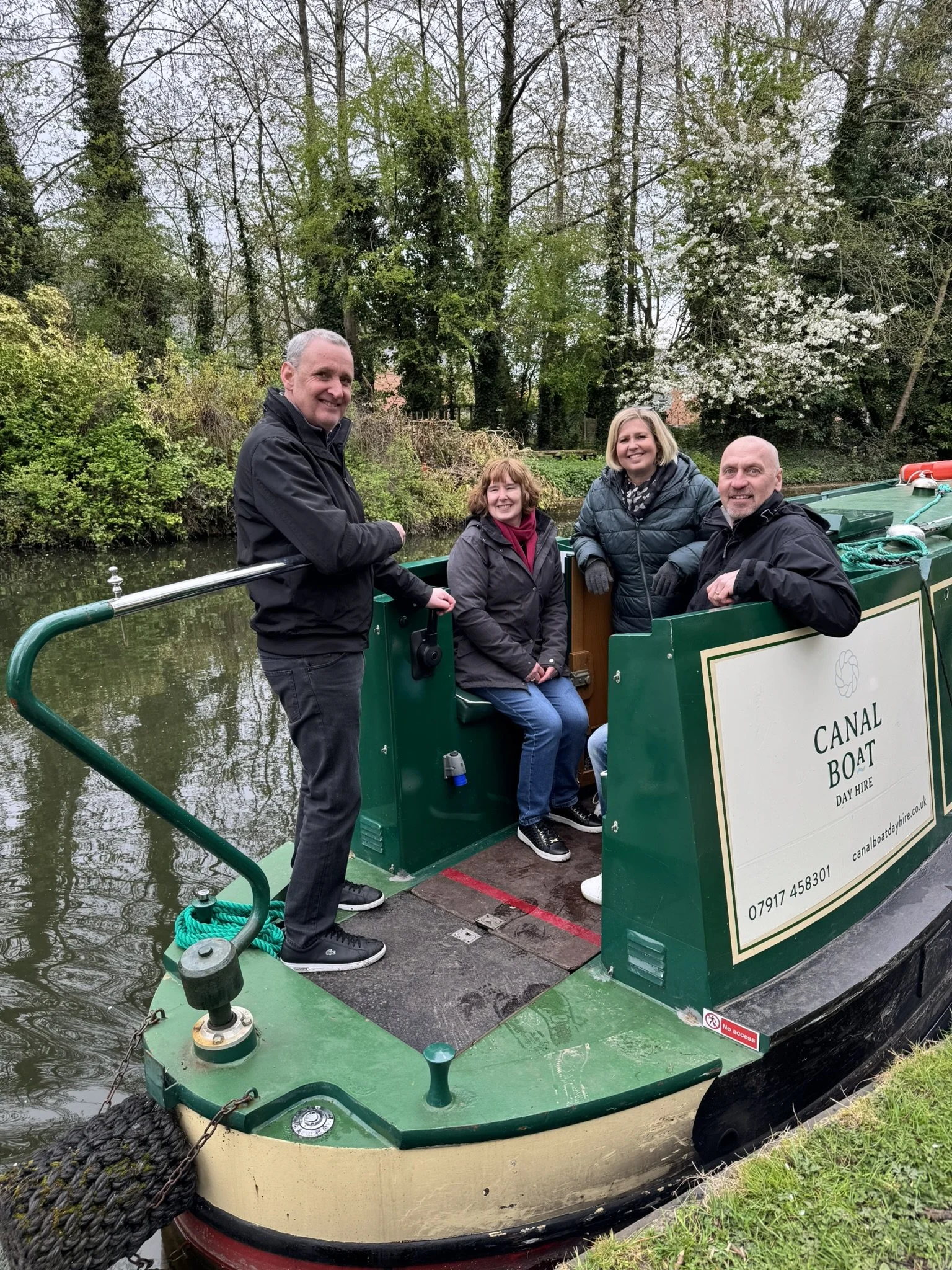
Taking turns in steering Tilly along the Grand Union Canal in Apsley towards Hemel Hempstead
Most corporate away-days follow the same script: a meeting room, a facilitator with a flipchart, maybe an escape room if the budget stretches to it. A day on the water is a genuinely different kind of team day — not a forced exercise dressed up as fun, but an actual shared task that only works if people talk to each other, take turns, and figure things out together.
Who's Actually Booked a Team Day on Tilly
This isn't a theoretical pitch. Groups who've booked a day on Tilly for exactly this reason include nurses from local hospitals, police officers, a group from Transport for London, and at least two different estate agent teams. None of them were "boat people" beforehand — they were colleagues looking for something to do together that wasn't another meeting room, and a full day out on the Grand Union Canal gave them exactly that.
Why Teams Head North
A pattern that comes up again and again with corporate groups: they tend to head north from Apsley Marina, since that gives everyone a couple of hours of cruising before a natural stopping point for lunch. It breaks the day into two genuinely different halves — steering, locks and conversation in the morning, a proper break together, then the return leg in the afternoon — rather than one long stretch with nothing to punctuate it.
That morning stretch north also means the group arrives somewhere with a proper canalside pub or towpath café for lunch, rather than unpacking sandwiches on the bank. It gives the day a natural midpoint — everyone off the boat together for a proper sit-down break — before turning around and heading back to Apsley in the afternoon with the morning's locks and steering already behind them.
Skippered or Self-Drive?
For a few of these corporate bookings, the group has hired Paul specifically as skipper, so nobody on the team is left solely responsible for actually getting the boat back safely. That takes the pressure off entirely — nobody has to worry about being the one who gets it wrong in front of colleagues. But a skippered hire doesn't mean sitting back and watching: on every single one of those occasions, the whole group has ended up taking turns joining Paul at the back of the boat to have a genuine go at steering Tilly themselves. The skipper is there for the responsibility, not to hog the tiller.
Self-drive works well too, particularly for a group that's confident and wants the full hands-on experience of managing the boat and the locks together from start to finish. Either way, every hire starts with a proper safety briefing and hands-on support through the first couple of locks, so nobody's thrown in without guidance regardless of which option a team chooses.
What Actually Makes It Work as Team Building
The reason a day like this works better than a lot of formal team-building exercises is that nothing about it feels engineered. Steering a narrowboat properly means listening to instructions, communicating clearly with whoever's on the bank or working a lock, and trusting a colleague enough to hand them the tiller. Working a lock as a group means someone winding the paddles, someone managing the gates, and someone keeping an eye on the boat — genuinely shared jobs rather than one person doing the work while everyone else watches. It's low-stakes, genuinely enjoyable, and the sense of having done something together tends to last a lot longer than an afternoon spent in a hotel conference room.
It's also a rare kind of day where seniority doesn't really matter. Whoever's steering is steering — job title has nothing to do with how well someone handles a tiller, and that levelling effect is part of what makes it work so well for mixed teams.
There's also no organising required beyond booking the date. There's no external facilitator to brief, no venue to set up, and no icebreaker games to plan in advance — the canal itself provides the structure for the day, and it fills itself naturally with locks, steering and conversation without anyone on the team having to make that happen.
Planning a Team Day
A hire suits groups up to ten, which covers most teams and small departments comfortably, and the price is the same regardless of how many people come along. If you're planning ahead for a department day out, a Christmas alternative to the usual office do, or simply a change of scenery for a team that spends most of its time behind desks, our Team Building page has more on how a day like this works.
Late autumn and winter are genuinely good times to book a corporate day — the canal is quieter, locks move faster with less traffic, and it's a natural fit for the kind of off-season team day a lot of businesses look for once the summer social calendar has quietened down. Worth knowing too: weekend and peak-season dates fill up fast, so if there's a date in mind, our post on how early you should book is worth a read before settling on one.
Frequently Asked Questions
What kind of groups have actually booked a team day on Tilly? A genuine mix — nurses from local hospitals, police officers, a Transport for London team, and estate agent groups among others. None were experienced boaters beforehand.
Do we need a skipper, or can the team drive the boat themselves? Either works. A skippered hire means nobody's solely responsible for getting the boat back safely, though everyone still gets a proper turn steering. A self-drive hire suits a confident group that wants to manage the whole day themselves, with full guidance given at the start.
How many people can come on a team day? Up to ten, which comfortably covers most teams or small departments, and the price stays the same whatever the group size.
Is a canal boat day actually good for team building, or is it just a nice day out? Both, genuinely. Steering, working locks, and communicating as a group are real shared tasks that need everyone's input — it works as team building precisely because nothing about it feels forced.
Is winter a good time to book a corporate day? Yes — the canal is quieter, and it's a popular choice for an off-season team day once the busier summer months have passed.
Final Thoughts
A day on the water gives a team something a conference room never can: a genuinely shared task, with everyone taking a turn, away from desks and job titles entirely. Whether it's steering, working a lock, or just the walk to lunch and back, it tends to be the kind of day people actually remember rather than one they sit through.
Ready to plan a team day out? Check our current Hire Prices and book now.