
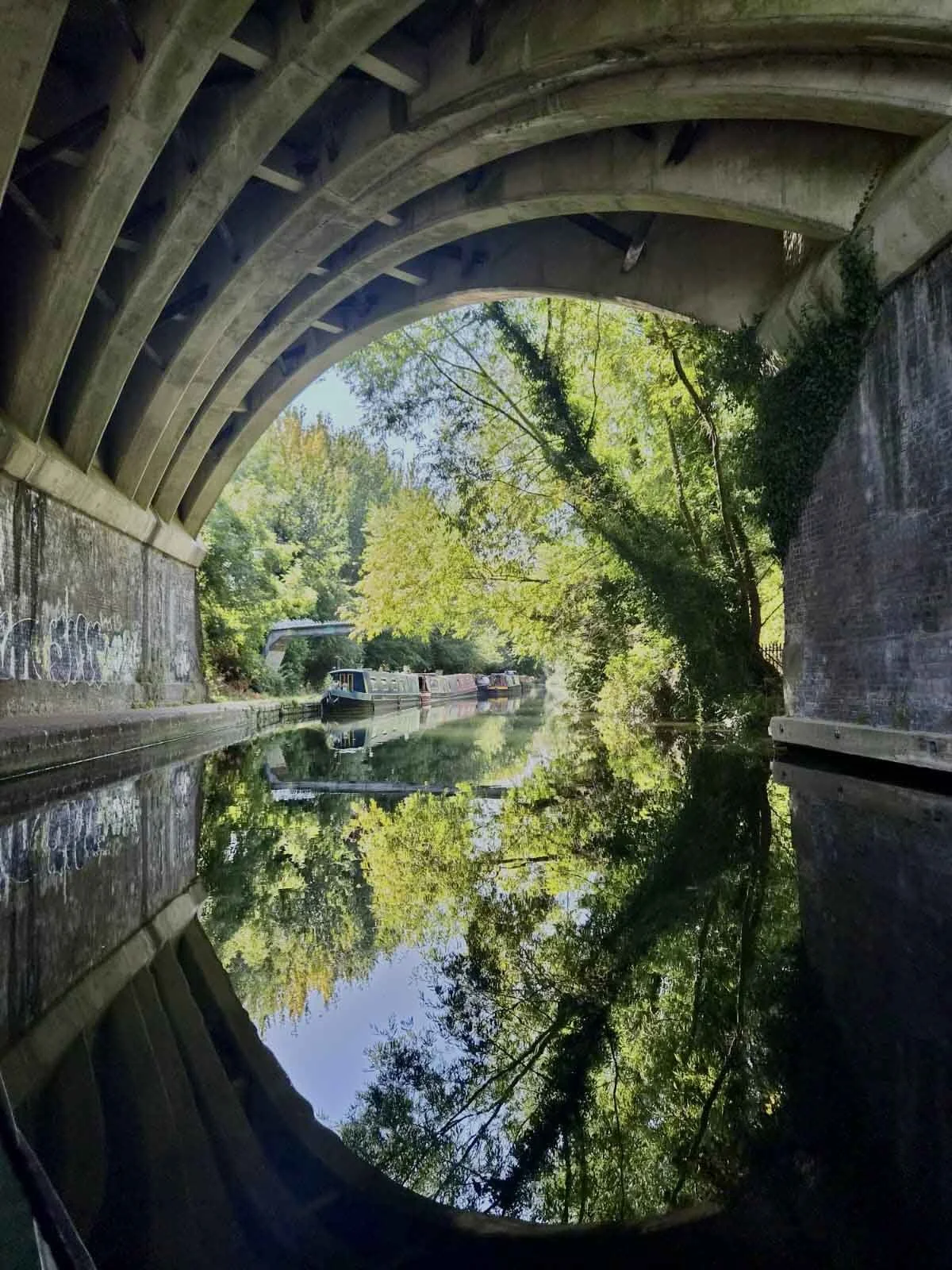
Under the train bridge in Kings Langley, Hertfordshire
Cruise past the marina today and it's easy to see Apsley purely as a pleasant stretch of water — moorings, waterside apartments, a pub or two, somewhere to start a relaxed day out. What's much less obvious from the tiller is that this same stretch of canal once sat at the heart of a working industrial town that, twice in the twentieth century, found itself pulled directly into the business of war.
An Older Connection Than You'd Expect
Apsley's link to Britain's military history actually predates both World Wars by more than a century. Back during the Napoleonic Wars, Apsley Mill was already supplying cartridge paper to the British Army — the paper used to wrap gunpowder charges for muskets and cannon. It's a small detail, but a telling one: long before anyone had heard of a World War, the mills lining this canal were already tied into how Britain equipped its soldiers.
The First World War: A Mill Turned Over to Munitions
When war broke out in August 1914, Apsley changed almost overnight. John Dickinson's paper mill here was converted into a munitions factory, switching a significant part of its output from paper products to war material. It wasn't an isolated change either — the whole area around Hemel Hempstead filled with military activity that summer. The 8th County of London Brigade of Artillery was stationed at Apsley itself, arriving in the space of a fortnight in early-to-mid August, while other artillery brigades set up along the High Street, at Marlowes, and out at Boxmoor. A large hutted army camp went up at nearby Gadebridge Park to house the influx.
The scale of it put real strain on a small town. The military requisitioned horses, wagons and carts for transport, several local schools were commandeered for military use, and the pressure on infrastructure was severe enough that a new road bridge over the River Gade had to be built in 1915, replacing what had previously just been a ford. None of that is visible from the water today, but it gives a sense of just how much this quiet stretch of canal-side town was reshaped, almost overnight, by a war fought hundreds of miles away.
The Second World War: Paper and Munitions, Side by Side
By the time the Second World War arrived, Dickinson's operation at Apsley had grown into a genuinely large industrial concern, and it leaned into the war effort just as directly. Between 1939 and 1945, the mills employed more than 7,000 workers at their peak, producing munitions alongside their usual paper and paper products rather than one instead of the other. That's a striking number for what's now a quiet residential and leisure stretch of the canal — at its wartime peak, this was one of the biggest employers in the area, running dual-purpose production lines to keep both the war effort and ordinary paper supply going at once.
It's worth pausing on what that actually meant day to day: thousands of people, many of them women taking on factory roles while men served overseas, working shifts that turned out both the paper Britain still needed and materials that fed directly into the war. The mills didn't stop being a paper business during the war — they simply carried an extra, heavier purpose alongside it.
The Canal's Quieter Role
Through all of this, the Grand Union Canal kept doing what it had always done for Apsley's mills: moving huge quantities of raw material in, and finished product back out, by barge. It's easy to romanticise canal boats as purely leisurely today, but for well over a century this was proper working infrastructure, and during the mills' wartime years that transport link mattered more than ever. Every barge moving along this stretch was, in its own way, part of keeping a stretched wartime economy supplied.
That working history is part of why the canal looks the way it does even now — the width, the towpath, the lock spacing were all built around moving goods efficiently, not for the pleasure cruising most of us associate with it today. Full-scale paper production at the mills didn't wind down until well after the war, and it's only really since the 1990s that this stretch shifted fully from an industrial route to the leisure one we enjoy now.
What's Left to See Today
Almost none of the wartime-era buildings survive in their original form — the marina itself was purpose-built from the ground up in the early 2000s, after the old mill sites had stood vacant for years following the paper industry's decline. But the area's industrial roots are still acknowledged here and there if you know to look, and the story behind them runs a lot deeper than most people expect from a spot best known today for coffee, moorings and a Sunday cruise.
If you want the fuller picture of how this stretch went from working mill town to modern marina, our guide to the history of Apsley Marina covers that whole journey. And if you're curious how papermaking took hold along this part of the Grand Union in the first place, the story of Frogmore Paper Mill picks up that earlier thread, just a little further along the water.
Frequently Asked Questions
Was Apsley Mill really turned into a munitions factory? Yes — during the First World War, John Dickinson's mill at Apsley was converted to munitions production, alongside the significant military presence that filled the wider Hemel Hempstead area from August 1914 onwards.
Did the mills only make munitions, or paper too, during the wars? Both. During the Second World War in particular, the mills ran paper and munitions production side by side, employing over 7,000 people at their peak between 1939 and 1945.
Is there any physical evidence of this history left at the marina today? Very little in its original form — the marina was purpose-built from the ground up in the early 2000s, after the old industrial sites had been vacant for years. The history survives mostly in local records and the area's naming rather than in surviving buildings.
Did the canal itself play a role during the wars? Indirectly, yes. The Grand Union Canal was the main way raw materials reached the mills and finished goods left them, so it remained working transport infrastructure right through both wars, not the leisure route it is today.
What's the earliest known military link to Apsley's mills? It goes back further than either World War — Apsley Mill was supplying cartridge paper to the British Army during the Napoleonic Wars, over a hundred years before the mill's twentieth-century munitions work.
Final Thoughts
It's a strange thing to sit with on a peaceful cruise past Apsley Marina: this same short stretch of water once ran alongside a mill turned over to wartime production, a town filled with artillery brigades and army camps, and thousands of workers keeping both paper and munitions lines running at once. None of that history shouts for attention now, but it's there, quietly, under a stretch of canal most people only ever see as a nice place to spend a Sunday afternoon.
Ready to see this stretch of the Grand Union for yourself? Check our current Hire Prices and pick your date.